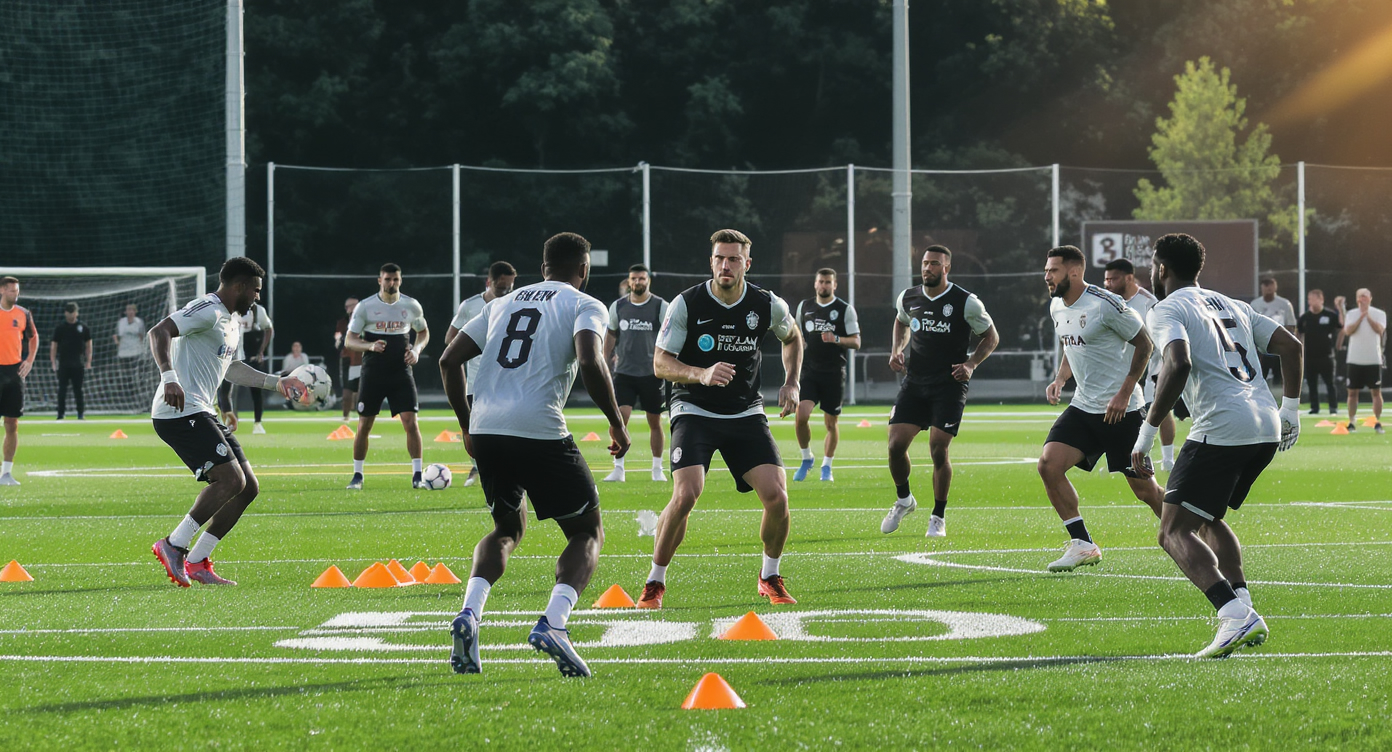
Building the Physical Base
Physical conditioning remains the foundation of football training. Players need endurance, speed, agility, and strength to maintain intensity for a full90 minutes. A solid program usually combines interval running, short sprints, coordination drills, and core strength work. This kind of training helps players move more efficiently while also lowering the risk of injury.
Recovery deserves the same attention as workload. Many teams focus too much on pushing volume, while recovery is what allows adaptation to happen. Proper rest, balanced nutrition, and cooldown sessions help the body recover faster and stay ready for the next training session.
Smarter Tactical Work
At a competitive level, tactics often decide the difference between winning and losing. Coaches need to train players to understand off-ball movement, attacking and defensive transitions, and how to read the game in real time. Small-sided games are especially useful because they force quicker decisions and improve team chemistry under pressure.
Tactical sessions should also fit the identity of the team. A side built around high pressing needs a different training structure than one that prefers counterattacking football. For that reason, every drill should have a clear match-related purpose instead of being repeated without context.
Mental Focus and Communication
The mental side of the game is often underestimated, yet it has a major impact on results. Confident players usually make better decisions when the pressure rises. Mental training can be supported through match simulations, video review, and open discussions between coaches and players.
Communication is just as important. Teams that talk actively on the pitch tend to defend more compactly and build attacks more efficiently. Training should encourage players to give instructions, call for the ball, and support each other instead of relying only on individual actions.
Consistency Drives Progress
There are no instant results in football development. The key is consistency and regular evaluation. A structured training plan helps a team grow step by step, from stronger fitness levels to better tactical understanding.
For clubs, academies, and football communities, this modern approach can serve as a practical foundation for more stable performance. When training is designed with a clear purpose, results on the pitch usually follow.